English
 Español
 Français
Home / News / Industry News / Wall Panel Selection Guide: Calcium Silicate, PVC, and Fire-Rated Options
Industry News

Content
Quick answer: For most commercial and wet-area interior walls, specify a calcium silicate wall panel rather than standard gypsum or plastic-faced board. It holds up to moisture, keeps its shape, and can meet A-class fire requirements without relying on paper facing. For dry, budget-sensitive decorative retrofits, a waterproof PVC wall panel can be the faster route. The decision should follow the wall's exposure, fire strategy, substrate, and installation sequence, not the panel's showroom finish.
A wall panel is a finished or semi-finished sheet fixed to a frame, adhesive, or direct-fix system. The label covers paper-faced gypsum, calcium silicate, fiber cement, PVC, WPC, and composite boards, so two quotes for the same square meter can describe very different products. For export projects, the useful comparison is not "which panel looks best" but "which panel keeps its performance after transport, cutting, fixing, and exposure to the room". The current wall panel range follows that logic: match the board to the wall condition first, then choose the surface.
A panel that is wrong for the room will usually fail at the joint, not in the catalogue. Use water exposure, fire strategy, impact risk, and acceptable downtime to shortlist the board before you ask for samples.
Use calcium silicate or a waterproof PVC panel with sealed cut edges. Check mould resistance and backside ventilation, not just the face finish.
Choose an A-class calcium silicate panel and confirm the certificate covers the full build-up: board, fixing, joints, and penetrations.
PVC wall panels or thin calcium silicate with a click-fix detail reduce downtime, but they still need a flat, dry substrate.
Use battens or a levelled frame. Do not bridge hollows with a thin panel; it will telegraph movement and crack at the joints.
The three families overlap in appearance but not in build-up. Calcium silicate uses inorganic siliceous and calcareous materials with reinforcement; gypsum uses a gypsum core with paper facing; PVC wall panels use a plastic skin around a hollow or composite core. That difference drives moisture behaviour, fire performance, weight, and fixing method.
| Panel type | Moisture | Fire | Impact | Installation | Best use |
|---|---|---|---|---|---|
| Calcium silicate | Excellent; stable in humid rooms | A-class possible | High | Screw or adhesive over battens; cut edges need sealing | Wet areas, fire corridors, public interiors |
| Gypsum | Poor in sustained wet conditions | Limited | Low to medium | Screw and joint compound | Dry residential and office interiors |
| PVC wall panel | Excellent | Varies by formulation | Medium | Adhesive or tongue-and-groove | Fast decorative refresh, wet rooms |
Ask for a straightedge check across the wall. A panel that is flat in the sample room can look wavy over a hollow masonry wall.
An A-class board does not guarantee an A-class wall. The fixing method, joint treatment, and penetration details must sit inside the tested scope.
Seal cut edges on calcium silicate and PVC panels. In wet rooms, leave a ventilated cavity or use a direct-fix system that does not trap water.
Square edge, tapered edge, and tongue-and-groove details change the labour time. Put the approved detail in writing before production.
Check thickness, density, shade, and edge squareness. A small tolerance at the factory becomes a visible step on a long corridor wall.
For wet rooms, the plastic-free waterproof Minecore wall panel is the natural starting point: it avoids a plastic face, seals well at the edges, and suits bathrooms, kitchens, and basement walls where mould and peeling are recurring problems.
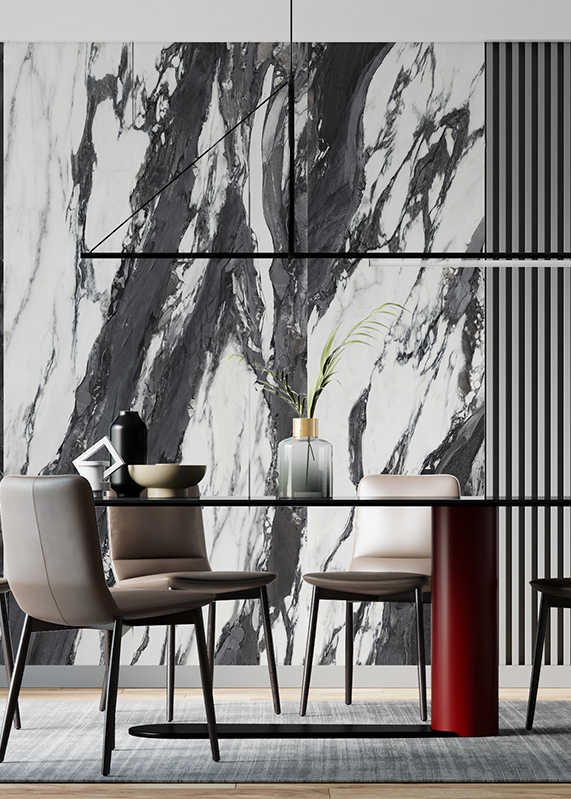 Plastic-Free Waterproof Minecore Wall PanelA natural starting point for wet rooms needing a non-plastic finish; it combines water resistance with tongue-and-groove installation and easy cleaning.View Product →
Use it where the client wants a non-plastic wall finish without giving up water resistance. Confirm the substrate, joint sealant, and fixing method for the room.
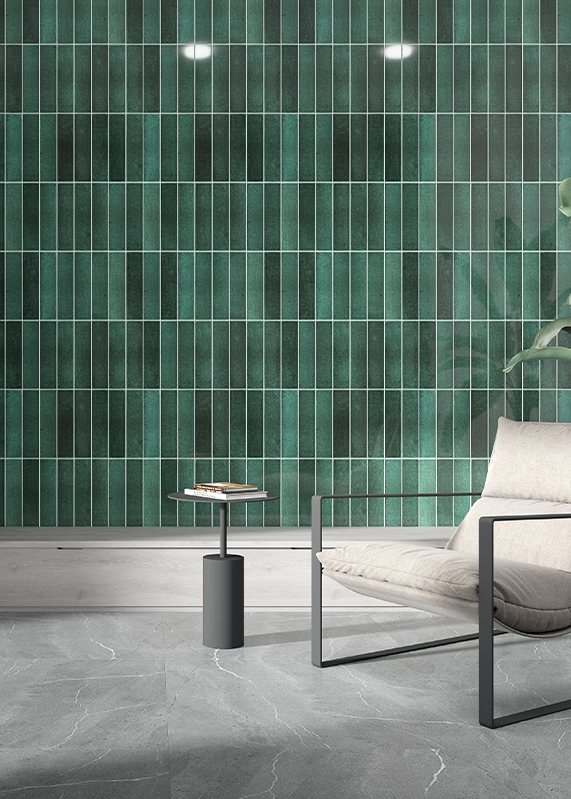 Minecore Easytile Calcium Silicate Wall PanelFor fire-rated corridors and public interiors, this Class A non-combustible panel supports quick dry installation, while the full wall build-up still needs fire assessment.View Product →
This is the better fit for fire-rated corridors, stairwells, and public interiors where installation speed matters. The fire strategy still needs to cover the full wall build-up, not just the board.
Both options can be quoted with CE, SGS, and ITS documentation, subject to the current test scope for the selected product. To compare a sample against your wall condition and request the latest report, contact the team before the order is released.
No. Gypsum board has a gypsum core with paper facing. Calcium silicate board uses calcium silicate and reinforcement, so it handles moisture and fire differently. They are not interchangeable on a wet or fire-rated wall without checking the system.
Sometimes, but only after checking substrate condition, adhesive compatibility, weight, and fire strategy. If the tiles are loose or the wall is uneven, fix battens or remove the old finish first. Do not trap moisture behind the new panel.
It refers to a material's contribution to fire under a defined test method. The full wall assembly, fixing method, joints, and penetrations must still match the certified system. A board certificate alone is not enough.
Compare thickness tolerance, density, edge profile, fire certificate scope, moisture resistance, packing, and sample approval, not just price per square meter. A lower board price can disappear once fixing time and waste are added.
Calcium silicate is heavier and can be brittle at the edges, so a competent drywall or panel installer with the right blades, screws, and dust control is usually enough. Fire-rated systems should follow the manufacturer's method statement.
FEEL FREE TO ASK US IN ANY OF YOUR NEED

 East Royal Building, Jiefang East Road, Yixing City, Jiangsu Province, China.
QUICK LINKS
Home Products About Re-Home Services News Contact Us Privacy
WHAT’S NEWS
Copyright © Wuxi Re-Home New Materials Co.,Ltd. Rights Reserved.