English
 Español
 Français
Home / News / Industry News / LooseLay Flooring Guide: Thickness, Installation and Essential Site Checks
Industry News

Content
LooseLay flooring holds its position through plank mass and friction instead of adhesive, so it succeeds or fails on three conditions: a substrate that is genuinely flat, a room held at a stable temperature, and a plank heavy enough for the traffic above it. When those line up, you get a floor that can be lifted, rotated for wear and repaired plank by plank without demolition dust. When they do not, seams open during the first heating season, and no amount of re-rolling will close them again.
A loose lay plank is a vinyl composite plank, almost always 4.5 mm or 5.0 mm thick, laid directly onto a prepared substrate with no adhesive, no tackifier and no click profile. It stays put because of its mass, the friction between its backing and the floor, and the tight butt joints along the seams. There is no interlocking tongue, which is why careful seam cutting matters far more here than on a click floor.
Four layers do the work. A transparent wear layer takes the abrasion, a printed design film provides the visual, a mineral-filled vinyl core gives the plank its weight and stability, and a fibreglass backing gives it the memory to lie back down after a load passes over.
That fibreglass backing is the layer buyers underestimate. When a chair leg, a display stand or a pallet presses into the plank, the backing pulls the surface back to flat. Indentation recovery, not raw surface hardness, is what keeps a loose lay floor looking new after two years of retail traffic.
The most useful question at quotation stage is not which colour, but which rooms. The same plank performs beautifully in one setting and badly in another, and the difference is almost always temperature, moisture or point load.
Yes. Planks lift and relay, which keeps deposits and downtime predictable.
Yes, with a 5.0 mm plank and a proper roller pass after fitting.
No. Surface temperatures above roughly 40 degrees soften edges and open seams.
No. Water that gets under a plank has nowhere to drain or evaporate.
Only after a moisture test and a continuous vapour barrier, confirmed in writing.
Glue-down instead. Rolling loads shear a loose laid floor over time.
Yes. Loose lay lifts cleanly when service panels need to come up.
Often yes, laid directly over tile or terrazzo after filling the grout lines.
For renovation work the thinner profile is usually the better commercial choice, because it trims neatly against existing thresholds and keeps freight weight down. The Nova Collection 4.5mm LooseLay range was developed around exactly that scenario.
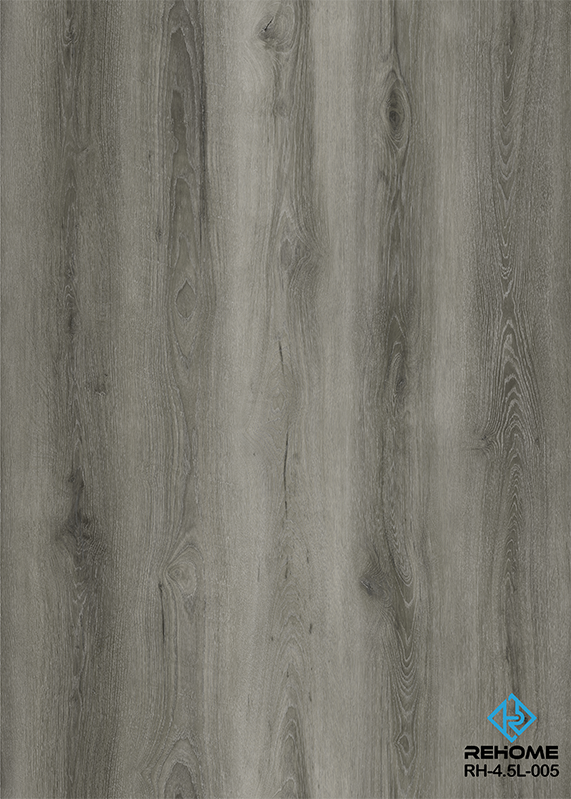 Nova Collection 4.5mm LooseLay Vinyl Plank FlooringA thinner glue-free LooseLay vinyl plank for renovation work, with wood-look finishes and a rigid core suited to residential and light commercial spaces.View Product →
Check flatness with a straightedge, typically 3 mm under a 2 m length, and record moisture readings in writing. Loose lay hides small defects better than glue-down, but it telegraphs humps and dips through the wear layer within weeks.
Lay cartons flat in the room for 24 to 48 hours at 18 to 29 degrees Celsius. Planks stored on edge or in a cold container will curl at the ends and refuse to sit tight on the first day.
Start from the longest straight wall, hold a perimeter gap of roughly 3 to 5 mm for movement, and stagger end joints by at least 200 mm. In long narrow rooms, run planks along the main light source.
Cut with a hook blade from the face side. After each row, run a fingertip along the seam; any catch you can feel now will collect dirt and lift later.
Pass a 45 to 68 kg roller across the finished floor to bed the planks down. Keep heavy traffic off for 24 hours and avoid wet cleaning for 48 to 72 hours.
Two planks can look identical in a showroom and behave completely differently on site. The table below covers the practical differences that show up in specifications and claims.
| Check | 4.5 mm plank | 5.0 mm plank | Why it matters |
|---|---|---|---|
| Typical use | Domestic renovation, rentals, home offices | Light commercial, retail, hospitality | Traffic class drives the warranty conversation |
| Indentation recovery | Good under domestic furniture | Better under display stands and chairs | More mass spreads point loads over a wider area |
| Rolling loads | Not recommended | Limited, with protection mats | Shear forces still argue for glue-down |
| Trimming at thresholds | Fewer reducer strips needed | May need a reducer at some doorways | Affects trim cost and installation time |
| Freight weight | Lower per square metre | Higher per container | Changes landed cost more than the unit price suggests |
Wear layer thickness deserves as much attention as overall thickness. A 0.3 mm wear layer suits a spare bedroom; a busy entrance hall or a shop floor usually justifies 0.5 mm or 0.55 mm. Ask for the number in millimetres, not the phrase "commercial grade".
Where traffic is mixed and the floor needs to survive trolleys and display fixtures, a heavier plank earns its freight cost. The Haven Collection 5.0mm LooseLay range sits at that end of the specification.
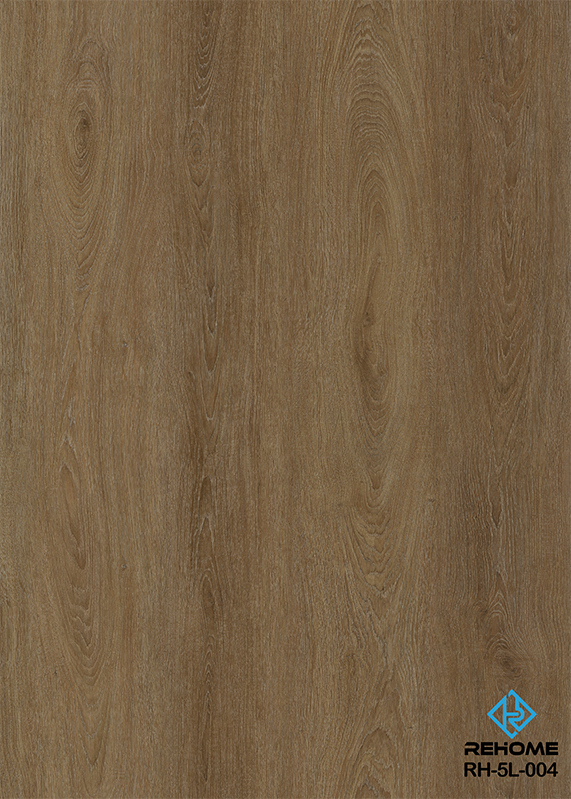 Haven Collection 5.0mm LooseLay Vinyl FlooringA heavier glue-free LooseLay vinyl floor for mixed traffic, offering a 5.0mm rigid core and wear-layer options for commercial and residential settings.View Product →
Writing these six lines into the tender documents costs nothing and removes most of the arguments that follow a bad installation.
No adhesive, no profile, fastest to lift and relay. Best where floors need to come up again, or where adhesive is banned by the building. Weakest against rolling loads and hot glazing.
A mechanical joint carries the load between planks, so it tolerates slightly less flat preparation. Harder to repair a single damaged plank without disturbing neighbours.
Full adhesion handles trolleys, temperature swings and heavy traffic best. Needs a moisture-tested slab, a skilled fitter and a longer programme on site.
Many projects mix the three: loose lay in offices and showrooms, glue-down in back-of-house corridors. That is a normal specification, not a compromise.
For a second opinion on whether loose lay suits a specific project, send us your room schedule and traffic data and we will come back with the applicable specification and test documents.
Does loose lay flooring need adhesive anywhere?
No, and adding adhesive changes the system rather than improving it. Some installers use a small amount of pressure-sensitive adhesive at doorways and thresholds, but that should come from the manufacturer's written instructions, not from habit.
Can it be laid over existing tiles?
Usually yes, provided the tiles are sound, well bonded and the grout lines are filled flush. Any loose tile must be removed and the area levelled, or the defect will show through the new plank.
How long does installation take?
A two-person team typically fits 60 to 90 square metres a day once the substrate is ready. Preparation, not laying, is where the programme usually slips.
Is it suitable for a kitchen?
A dry kitchen area is generally fine. A utility room with a washing machine or a bathroom with a floor drain is not, because spilled water migrates under the planks and stays there.
Can underlay be used underneath?
Rarely. A soft underlay reduces the friction the plank relies on and increases seam movement. If a manufacturer approves a specific underlay, use that one and nothing else.
FEEL FREE TO ASK US IN ANY OF YOUR NEED

 East Royal Building, Jiefang East Road, Yixing City, Jiangsu Province, China.
QUICK LINKS
Home Products About Re-Home Services News Contact Us Privacy
WHAT’S NEWS
Copyright © Wuxi Re-Home New Materials Co.,Ltd. Rights Reserved.