English
 Español
 Français
Home / News / Industry News / Minecore Wall Panel: Specs, Fire Rating, Installation and Buying Guide
Industry News

Content
Minecore wall panel is a plastic-free mineral cladding board, a calcium silicate panel built from silica, lime and cement, that combines a Class A fire rating with full waterproofing and a fast, low-mess installation. For a shower wall, a busy corridor or a fire-rated stair core, it does the job gypsum board cannot and PVC panel should not. The catch is that Minecore describes a construction method rather than a fixed performance level: fire classification, water absorption, thickness and edge profile all shift with the production batch, so what you write into the purchase order matters more than the name printed on the pallet.
Minecore is a trade name for an autoclaved mineral board. The mix is dominated by silica sand or quartz powder, lime and Portland cement, usually with a small amount of cellulose fibre to hold the sheet together before curing. The sheets are formed, pressed and then steam-cured under pressure, which drives the lime-silica reaction that produces calcium silicate hydrate. That is the same chemistry behind calcium silicate boards generally, and it explains why the finished panel behaves nothing like gypsum or PVC.
Two practical consequences show up on site almost immediately:
Our plastic-free waterproof Minecore panel follows that build: a mineral core under a waterproof surface, backed by CE, SGS and ITS certification support so it clears customs checks and site inspections in Europe and North America without a second round of testing.
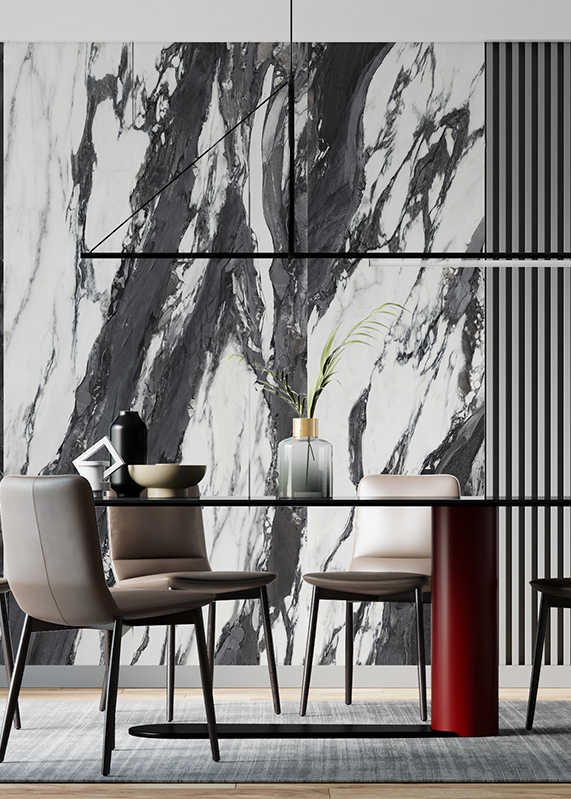 Plastic-Free Waterproof Minecore Wall PanelA plastic-free mineral-core interior panel with waterproof coating, tongue-and-groove locking, and certified support for humid residential or commercial walls.View Product →
Panels sold under the same name can differ enough to fail an inspection. These four lines are worth pinning down in writing before you place the order.
Class A on ASTM E84 and A1 or A2 under EN 13501-1 are the ratings buyers ask for most often. Ask for the report that covers the exact thickness and the exact surface finish you are buying. A rated core with an unrated laminate or paint system does not automatically carry the classification.
A waterproof claim covers two different things: water not passing through the panel, and the panel not swelling when water reaches it. For wet rooms, request the water absorption figure alongside the recommended jointing system, because most moisture failures start at a joint rather than in the middle of a sheet.
Wall panels are commonly supplied somewhere between 6 mm and 12 mm, and tolerance matters more than the nominal figure. A batch that runs thick will not sit flush with trims or clear a door frame; a batch that runs thin telegraphs every bump in the substrate. State an acceptable range in the order and check incoming goods against it.
Square, tapered and interlocking edges change both labour and finish. Interlocking formats cut alignment time, adhesive-bed formats need a genuinely flat substrate, and mechanical fixing patterns have to be agreed with the panel thickness. Write the method into the order so the installer and the supplier are working from the same instruction.
Most selection mistakes come from matching a panel to the wrong room rather than to the wrong supplier. These four cases cover the majority of enquiries, and you can read more detail on where calcium silicate wall panels are used in our industry notes.
Plastic-free waterproof panel, joints filled and sealed, silicone only at the tray junction. No paper facing anywhere in the build-up.
Higher impact resistance plus an agreed mechanical fixing pattern. Plan a trim at every external corner, because corners take the trolley hits.
Class A mineral core, with fire-stopping at every penetration, service box and head-of-wall joint, not only at the panel face.
Thin panel on a notched adhesive bed keeps the build-up low enough to keep existing door frames and skirting lines intact.
Fire is where the mineral core separates itself from the alternatives. Because the panel contains no combustible binder, a calcium silicate wall panel can reach Class A on ASTM E84 and A1 or A2 under EN 13501-1, ratings that a PVC panel or a paper-faced gypsum board cannot match at the same thickness. In a corridor, a stair core or a plant room, that classification is usually the reason the panel was specified at all, so it is worth confirming the report before the order rather than after the delivery.
Installation speed is the other half of the case. Quick-install formats such as the Easytile edge are designed for repeatable panel-to-panel alignment, and alignment is where most of the labour in wall cladding goes: setting out, checking level, adjusting, re-checking. When the edge does that work for the installer, a two-person crew covers noticeably more wall per shift and the finish stays consistent across a long elevation.
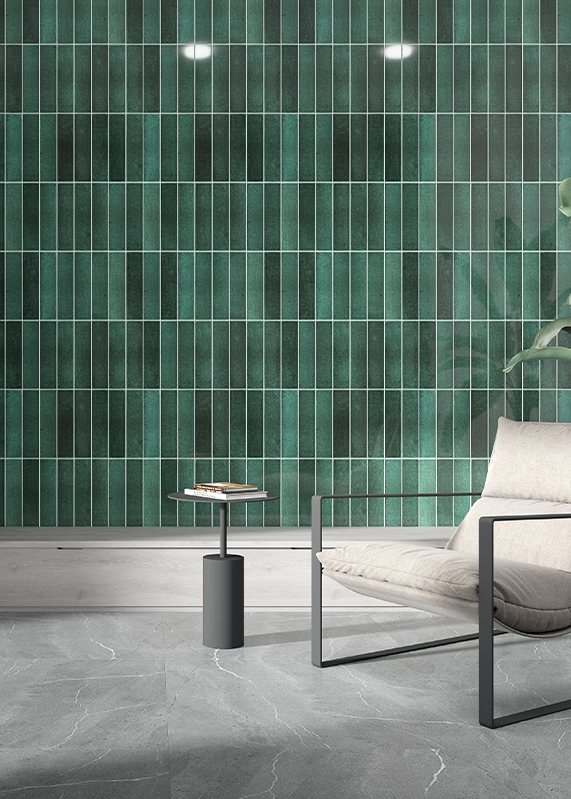 Class A Fire-Rated Minecore Easytile Calcium Silicate Wall PanelClass A fire-rated calcium silicate panel with dry-install Easytile edge, flat paintable surface, and moisture resistance for interior commercial or residential walls.View Product →
| Consideration | Minecore (calcium silicate) | Gypsum board | PVC wall panel |
|---|---|---|---|
| Fire behaviour | Non-combustible core, Class A or A1-A2 available | Paper facing limits performance unless a specialist board is used | Thermoplastic, adds fuel load |
| Water and damp | Does not swell or delaminate, core stays stable | Core softens and crumbles once wet | Waterproof, but traps moisture behind the panel |
| Plastic content | None | None | High |
| Mould risk in wet rooms | Low, no organic surface to feed growth | High if the paper facing stays damp | Low on the face, high behind it |
| Impact resistance | Good, denser and harder than gypsum | Low without an added protective layer | Moderate, dents and cracks in cold weather |
| Installation | Adhesive or mechanical fixing, interlocking options | Light and fast, needs taping and skimming | Fast, but joints and trims stay visible |
| Finish quality | Paint or decorative surface on a flat panel | Skim coat gives the flattest result | Moulded texture, limited design flexibility |
Flat, dry and dust-free. On concrete, take a moisture reading first, because the panel is dimensionally stable but the adhesive bed behind it is not.
Work from the lowest point of the floor line rather than the ceiling, and cut with a carbide-tipped blade or a score-and-snap method. Leave an expansion gap at the floor.
Apply adhesive in the pattern the supplier specifies, or use the interlocking edge on the quick-install route. Check level every few panels, not after the wall is closed.
Fill joints, then seal internal corners and wet-area junctions with sanitary silicone. In a shower, seal the tray line only, since a fully sealed face traps water behind it.
Panels rarely fail because of the material. They fail because the order left something open. A wall panel purchase order should state:
If you are working from architectural drawings, send us the wall layouts and we will return a panel schedule with fixings, trims and quantities marked, so the quotations you compare are genuinely like-for-like.
It belongs to that family. Minecore is a trade name for a plastic-free, waterproof calcium silicate wall panel format, so the core chemistry is the same while the surface finish, edge profile and thickness are what you actually specify.
Usually yes, with the correct adhesive and a thin panel format. Check the added build-up against door frames, sockets and skirting lines first, because that is what decides whether an overlay works.
No. Joints are filled and the panel face takes paint or a decorative finish directly. The trade-off is that the substrate has to be flat, because there is no skim coat hiding minor irregularities.
Ask for Class A on ASTM E84 or A1-A2 under EN 13501-1, and insist the test report matches the thickness and surface finish you are buying. A rated core alone is not enough if the finish is unrated.
Yes, provided joints are filled and sealed and the tray junction is detailed correctly. Waterproofing is a system detail, not a single panel property, so the sealing schedule matters as much as the board.
Mineral boards are generally denser than gypsum of the same thickness, so ask for the weight per square metre at your specified thickness and check it against the fixing pattern and substrate.
FEEL FREE TO ASK US IN ANY OF YOUR NEED

 East Royal Building, Jiefang East Road, Yixing City, Jiangsu Province, China.
QUICK LINKS
Home Products About Re-Home Services News Contact Us Privacy
WHAT’S NEWS
Copyright © Wuxi Re-Home New Materials Co.,Ltd. Rights Reserved.