English
 Español
 Français
Home / News / Industry News / Calcium Silicate Wall Panels: Properties, Applications, and Buying Guide
Industry News

Walk into any bathroom renovated five years ago with standard wall board and you will usually find the same story: swelling near the water line, paint lifting around the fittings, and a dark line of mould along the skirting. The same board that looked perfectly acceptable in a dry hallway quietly fails in a wet one. Calcium silicate wall panels address that pattern directly. They stay dimensionally stable in humid rooms, they do not feed mould the way paper-faced gypsum does, and they bring a non-combustible rating that most common wall boards cannot match. If you are specifying walls for a shower room, kitchen, basement, or fire-rated corridor, this is the substrate you should benchmark everything else against.
A calcium silicate wall panel is a dense, mineral-based building board made from calcium and silica raw materials with reinforcing fibres, cured in an autoclave under heat and pressure. Because the core is inorganic, the board is naturally resistant to fire and does not provide a food source for mould. That is the basic reason it behaves differently from organic boards in wet and fire-exposed areas.
The process starts with sand, lime, and fibre reinforcement mixed into a slurry, formed into sheets at a controlled thickness, then cured under saturated steam in an autoclave. This hydrothermal reaction creates a crystalline structure that gives the board its stiffness and low moisture movement. Denser grades are used where impact resistance matters; lighter grades where handling weight is a concern.
Four properties do most of the work in specification:
| Property | Typical value | Why it matters |
|---|---|---|
| Density | 1.0-1.5 g/cm3 | Denser boards hold fasteners better and resist impact; heavier boards need two-person handling. |
| Thickness | 6 / 8 / 10 / 12 mm | 8 mm covers most interior walls; thicker boards suit higher-impact or fire-rated assemblies. |
| Flexural strength | roughly 10-15 MPa | Higher values resist cracking under racking and handling stresses. |
| Fire classification | A1 or A2-s1,d0 (EN 13501-1) | Allows use in escape routes and fire-risk zones without an extra fire barrier. |
| Moisture behaviour | low absorption, low swelling | Keeps joints flat and the finished surface stable in humid rooms. |
Three situations dominate demand: wet interiors, fire-rated areas, and renovation jobs over damaged surfaces. Each one exposes the weaknesses of cheaper boards.
Bathrooms, shower rooms, kitchens, and laundries are the most common retrofit targets. The mineral core does not wick water or swell, so boards installed behind tiles or in ventilated spaces stay flat and give mould little to grow on. For specifiers who want to remove plastic from wet-room finishes entirely, a plastic-free waterproof Minecore wall panel is a practical alternative to vinyl-faced boards; the core and surface coating are both designed for damp interiors without a PVC layer. If you work across different building types, our detailed run-through of calcium silicate wall panel application scenarios maps the most common uses room by room.
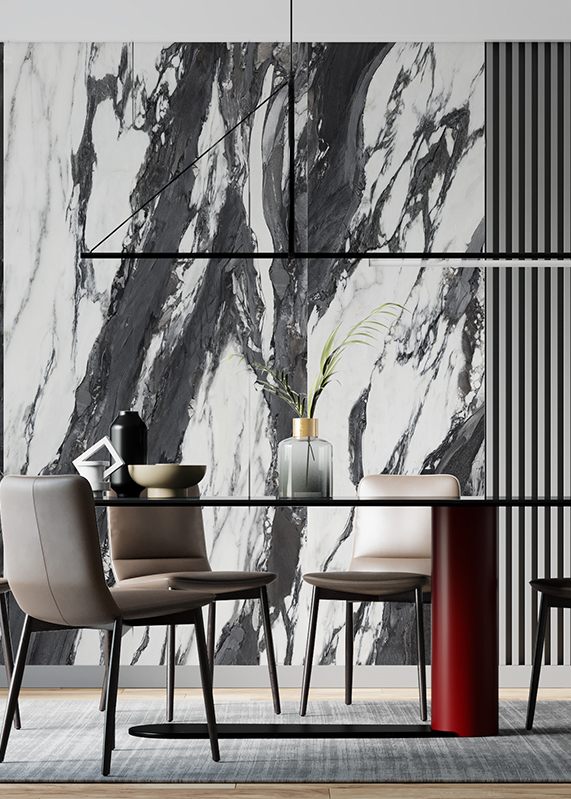 Wholesale Non-Plastic Wall Panel Suppliers, FactoryWuxi Re-Home Is A China-Based Wholesale OEM Non-Plastic Wall Panel Supplier & Factory, Offering Durable, Waterproof Minecore Wall Panels ...View Product →
Escape corridors, stairwell enclosures, lift lobbies, and plant rooms all need predictable fire behaviour. In many national codes these walls must meet a non-combustible classification or a specific fire-resistance period. Calcium silicate panels give that classification as a standard material property rather than as an extra coating. When installation speed also matters, a Class A fire-rated Minecore Easytile panel combines the non-combustible core with a faster jointing method, which directly reduces the programme on commercial fit-outs.
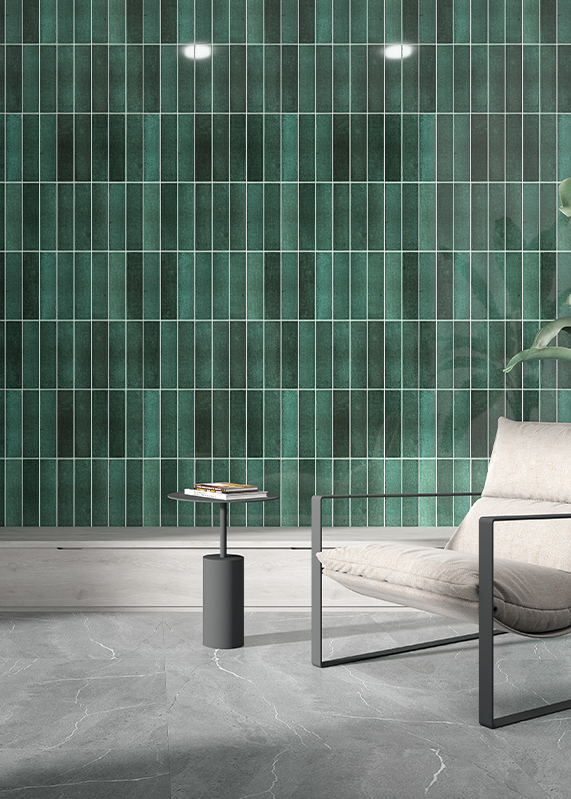 Wholesale Class A Fire Rating wall panel Suppliers, FactoryWuxi Re-Home New Materials Co., Ltd Is China Wholesale Class A Fire Rating wall panel Suppliers, Factory, We Offering OEM Durable And Eco...View Product →
Mouldy plaster, flaking paint, old tile, and damp patches rarely sit on a perfectly flat base. Because calcium silicate boards are dimensionally stable, they can often be fixed directly over a sound, dry surface instead of tearing the room back to masonry. The two conditions are that the old surface must be structurally sound and that the board joints must be treated properly; the panel then supplies a clean, even base for tiling or painted finishes.
Calcium silicate boards are also used in external cladding, but only with a grade designed for weather exposure and with correct moisture detailing. For most specifiers the interior applications above are the safe starting point.
Every wall panel category does one job well, but rarely all of them. Gypsum board is cheap and easy to cut but suffers in damp rooms. Cement board is very moisture resistant but heavier and harder to finish crisply. PVC panels are waterproof but combustible and they flex behind large tiles. Calcium silicate sits in the middle: better fire and moisture performance than gypsum, cleaner install than cement board, and a rigid tile-ready surface that PVC cannot offer.
| Criterion | Calcium silicate | Gypsum board | Cement board | PVC panel |
|---|---|---|---|---|
| Fire | Non-combustible (A1/A2) | Paper-faced, lower rating | Non-combustible | Combustible, softens in heat |
| Moisture | Low absorption, stays flat | Swells and moulds when wet | Very high resistance | Waterproof, but can trap moisture behind |
| Weight and handling | Dense, moderate to heavy | Light, easy to manoeuvre | Heavy, brittle edges | Light |
| Cutting | Score and snap or power saw | Fastest to cut | Score and snap, dusty | Knife cut, flexible |
| Tiling surface | Excellent, dimensionally stable | Needs moisture-grade and primer | Excellent | Poor behind large-format tiles |
| Cost position | Mid-range | Lowest material cost | Mid to high | Low to mid |
If your drawings currently specify gypsum and you are being pushed to justify the change, our comparison of calcium silicate board vs gypsum board covers densities, installation time, and where each option actually saves money.
Calcium silicate panels are not difficult to install, but they reward clean preparation. A reliable sequence looks like this:
Two common callbacks come from skipping the membrane in showers and from butt-jointing panels without support behind the joint. Both are easy to avoid if the sequence above is followed.
The price per board is the least useful number in an enquiry. Boards that look the same in a brochure can vary in density, thickness tolerance, and surface finish, and those differences appear on site as extra installation time and callback risk. Ask for written figures before you order.
If you already have a plastic wall panel system and are wondering whether the switch is worth it, the arguments are laid out in our article on the advantages of non-plastic wall panels over traditional plastic. In most projects, the material cost difference is small next to the cost of a failed wall.
Calcium silicate wall panels justify their material cost wherever moisture and fire risk meet: shower rooms, kitchens, basement conversions, and commercial corridors. The Minecore range covers both ends of that decision, with a plastic-free waterproof board for damp interiors and a Class A Easytile panel for fast fire-rated installation. When you compare suppliers, ask for density, fire certificates, and dimensional tolerances in writing, and cut a sample panel before committing to a large order. A supplier that provides those documents without hesitation is the one worth building a long-term relationship with.
FEEL FREE TO ASK US IN ANY OF YOUR NEED

 East Royal Building, Jiefang East Road, Yixing City, Jiangsu Province, China.
QUICK LINKS
Home Products About Re-Home Services News Contact Us Privacy
WHAT’S NEWS
Copyright © Wuxi Re-Home New Materials Co.,Ltd. Rights Reserved.