English
 Español
 Français
Home / News / Industry News / Wall Panels: A Practical Guide to Materials, Fire Safety, Moisture Resistance
Industry News

Twelve months after a bathroom renovation, the joints of the wall panels began to swell, dark streaks appeared on the painted surface, and a musty smell settled behind the vanity. The cause was not poor workmanship. The panel material was simply wrong for a wet environment. The same mistake repeats in commercial kitchens, laundry rooms, and basement corridors every year.
The conclusion that should come first for any buyer: wall panels are selected by environmental performance first and appearance second. If a wall panel cannot tolerate moisture, heat, or the fire class required in that room, the decorative finish is irrelevant. This guide explains what wall panels are, the material families available, the standards that separate them, and a practical selection procedure that applies to both residential and commercial projects.
Wall panels are rigid sheets fixed to interior walls as a faster alternative to paint, tile, or wallpaper. One panel covers a large surface in a single movement, which is why installers can finish a whole room wall in one day. Panels also protect the substrate from splash water, impact, and daily wear, and they hide uneven surfaces that would otherwise need repeated coats of plaster.
Everything depends on the core material. In a dry living room, a decorative board works because the environment never tests it. In a bathroom, stairwell, or hospital corridor, the panel is a building element with safety duties. That is why experienced specifiers evaluate a wall panel in this order: moisture behavior, fire classification, installation effort, and finally surface design.
Five material families dominate the interior wall panel market. They differ mainly in moisture resistance, fire behavior, installation effort, and price. The table below summarizes the typical performance of each family, with the understanding that individual products can vary with exact composition and surface treatment.
| Material | Moisture resistance | Fire behavior | Typical project fit |
|---|---|---|---|
| PVC / vinyl panels | High, waterproof surface | Limited; thermoplastic softens and emits corrosive smoke in fire | Bathrooms, utility rooms |
| WPC panels | High | Limited; class varies with formulation | Wet rooms, covered exterior areas |
| MDF / wood veneer | Low to moderate | Combustible | Dry interiors, feature walls |
| Gypsum board | Low when uncoated | Moderate to high in Type X | Offices, bedrooms, dry walls |
| Calcium silicate board | High; inorganic core | High; non-combustible, Class A | Bathrooms, corridors, stairwells, hospitals, schools |
PVC and vinyl panels are lightweight, waterproof, and easy to wipe down, which explains their popularity in bathrooms. Their limits show up under heat and impact: they soften, they can dent, and some formulations gradually lose plasticizers over time. For fire-regulated corridors and public buildings, PVC is rarely the first choice because the smoke from burning PVC is corrosive and toxic.
WPC panels combine wood fiber with a polymer core. They are stiffer than PVC and tolerate bathroom humidity well, which makes them a solid mid-range option. The trade-off is weight and fire classification: WPC is heavier to handle, and its fire rating generally stays below the level of mineral boards.
Wood-based panels offer the warmest texture and often the lowest entry price. The problem is moisture at cut edges and the natural combustibility of timber. A wood appearance in a wet area requires a veneer over a waterproof core and fully sealed edges, and that work erases most of the cost advantage.
Gypsum board is inexpensive, smooth, and offers decent fire resistance in its Type X version. It is soft, easy to damage, and normally requires jointing, taping, and a painted finish. In permanently humid rooms, uncoated gypsum encourages mold growth. If you want a direct comparison, our article on how calcium silicate board compares with gypsum board covers the strengths and weaknesses of each.
Calcium silicate board is an inorganic panel made from cement, silica, and reinforcing fibers. It contains no organic material, so mold and insects have nothing to feed on, and it is classified as non-combustible. It accepts paint or ceramic tile directly, stays dimensionally stable in humid rooms, and resists minor impact better than gypsum. This is the material family that solves the bathroom scenario from the opening. Outside residential wet rooms, the modern applications of calcium silicate wall panels include facades, industrial interiors, and renovation projects where speed and durability matter equally.
Fire class is the specification that buyers most often overlook, because it is invisible in the showroom. Escape routes, stairwells, corridors, and plant rooms in commercial buildings are all regulated by local codes, and the wall covering has to meet the same class as the structure itself.
Under ASTM E84 in the United States, Class A means a flame spread index of 25 or less on the material surface. Under EN 13501-1 in Europe, classes A1 and A2 cover non-combustible and limited-combustible boards. A panel in these classes does not contribute to flame development the way wood or plastic surfaces do. For a hospital corridor, the difference between a Class A board and a Class C panel is the difference between passing and failing the fire inspection. Calcium silicate boards achieve Class A in standard testing, and the Minecore Easytile Class A calcium silicate wall panel combines that rating with a fast fixing system for exactly these routes.
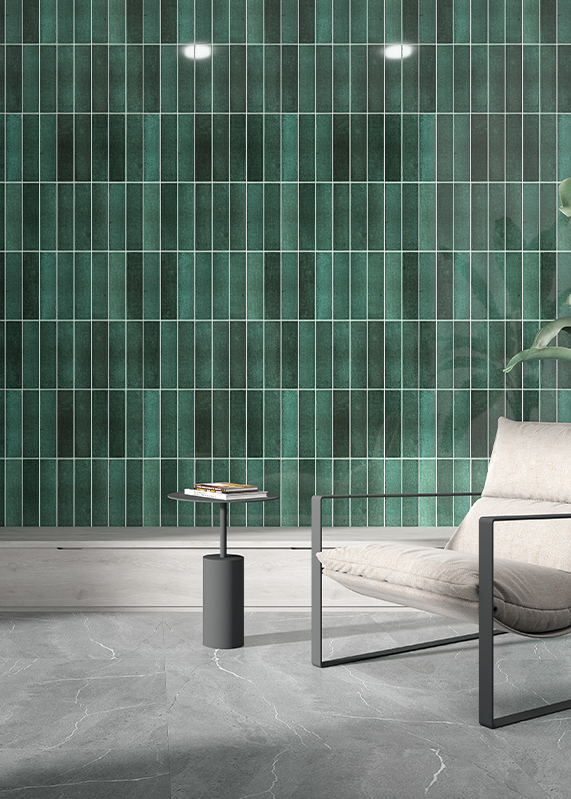 Wholesale Class A Fire Rating wall panel Suppliers, FactoryWuxi Re-Home New Materials Co., Ltd Is China Wholesale Class A Fire Rating wall panel Suppliers, Factory, We Offering OEM Durable And Eco...View Product →
Most moisture damage in wall panels does not come from a single splash; it comes from persistent humidity and condensation behind the panel. Wood-based panels swell from the core outward, lifting the surface film. Plastic panels can trap condensation on their back side because the surface is vapor-tight, and the damp cavity behind the panel becomes a breeding ground for mold.
Mold needs two things: moisture and organic food. Remove one and the problem largely disappears. Because calcium silicate has no organic content, mold does not colonize the board itself, and its open structure allows trapped vapor to escape. In shower surrounds, laundry rooms, and basement walls, that behavior directly changes the maintenance cost over a ten-year period. For projects that restrict plastic-based panels for environmental reasons, the plastic-free waterproof Minecore wall panel delivers the same moisture protection without a polymer core.
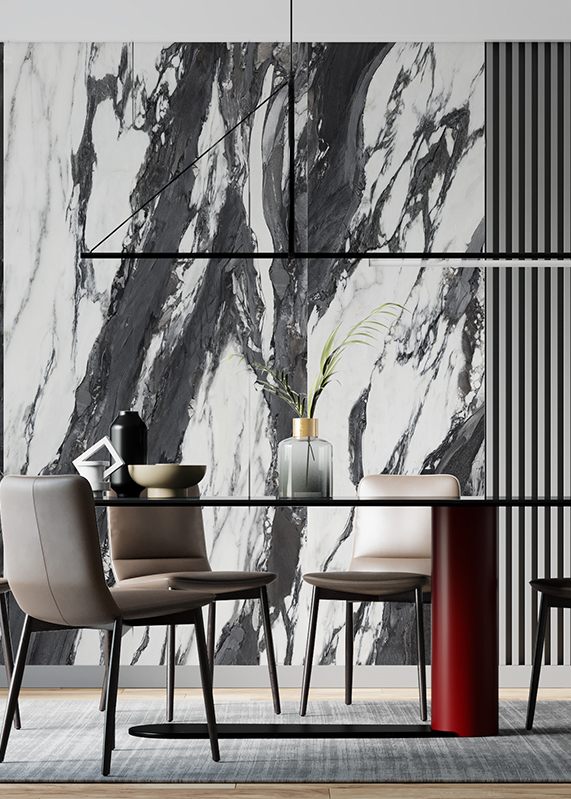 Wholesale Non-Plastic Wall Panel Suppliers, FactoryWuxi Re-Home Is A China-Based Wholesale OEM Non-Plastic Wall Panel Supplier & Factory, Offering Durable, Waterproof Minecore Wall Panels ...View Product →
Labor is the hidden variable in material selection. A panel that costs ten percent less but requires a second visit, joint compound, and a drying period is the more expensive option once the crew has left. Good wall panels cut with a standard circular saw and fix with ordinary construction adhesive, and the fastest systems add a tongue-and-groove or clip edge so the boards align mechanically while the adhesive cures.
Substrate preparation matters just as much. Panels fixed to a heavily uneven wall need furring strips or leveling compound before installation; panels fixed to a clean, dry, plastered surface go up in hours. A two-person crew can finish a residential bathroom in one day when both the substrate and the panel system are chosen correctly.
The material decision becomes clearer when you define the room, the wall function, and the load the panel will carry.
If you are specifying a whole room, pair the wall panels with a compatible waterproof floor such as an SPC click or LVT dryback system, and coordinate the joint profiles at the wall-floor transition. For more detail, our guide to which scenarios calcium silicate wall panels suit best walks through each application in depth.
Use this checklist when you evaluate panels from different suppliers. It keeps the conversation about performance rather than brochure photos.
Interior wall panels are a building layer, not a cosmetic accessory. They must survive the humidity of the room, satisfy the local fire code, and justify themselves through installation savings. For dry decorative walls, nearly any material works. For wet, busy, or regulated spaces, calcium silicate boards combine Class A fire performance, mold resistance, and fast installation in one package.
Re-Home supplies calcium silicate wall panels and coordinated flooring lines with CE, SGS, and ITS certification support. We provide samples, installation guidance, and project-level technical help before you commit to an order. Start with the performance requirements of the room, and the right panel will be far easier to identify.
FEEL FREE TO ASK US IN ANY OF YOUR NEED

 East Royal Building, Jiefang East Road, Yixing City, Jiangsu Province, China.
QUICK LINKS
Home Products About Re-Home Services News Contact Us Privacy
WHAT’S NEWS
Copyright © Wuxi Re-Home New Materials Co.,Ltd. Rights Reserved.